Home / PCB Layout / Altium PCB Layout
Altium PCB Layout Services
Constraint-Driven PCB Layout
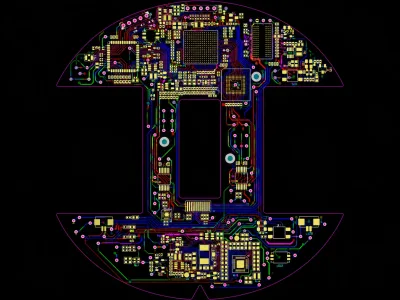
Altium PCB layout services are suitable for engineering teams that have completed schematics but need support with component placement, routing, design rule setup, or production file preparation.
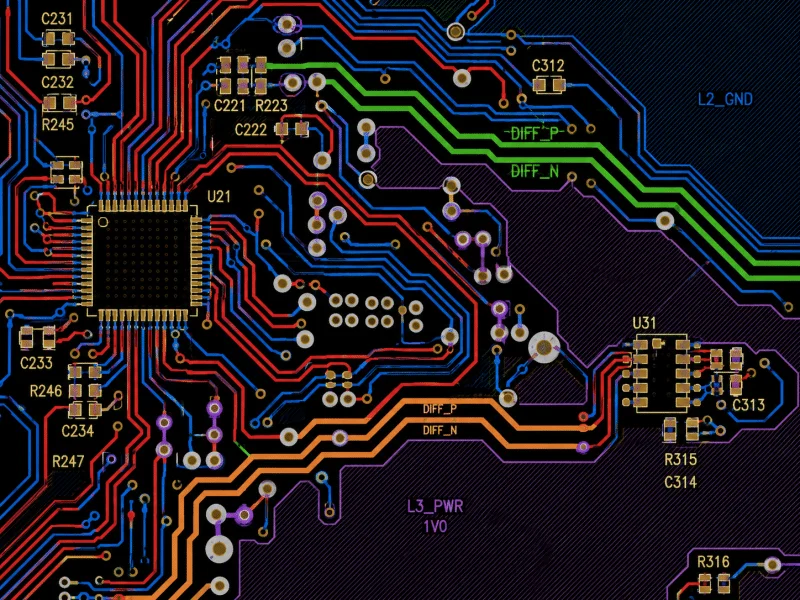
They are also useful for projects involving multilayer boards, controlled impedance, high-speed interfaces, tight mechanical constraints, or close coordination between PCB layout, fabrication, and assembly.
What We Need to Start Your Altium PCB Layout
To start the PCB layout, customers can provide schematics, board dimensions, component data, interface requirements, and any available stack-up or impedance specifications.
We also review mechanical drawings, connector locations, keep-out areas, routing constraints, and assembly requirements. If some information is incomplete, our engineering team can identify the missing details before layout begins.
What We Do in Altium PCB Layout
Our Altium PCB layout work covers component placement, routing, design rule setup,
engineering review, and manufacturing file preparation.
- Schematic review
- Component placement
- Board outline and mechanical constraints
- Design rule setup
- Multilayer stack-up planning
- Controlled impedance planning
- High-speed and differential routing
- Clearance and spacing checks
- Via structure review
- Fabrication drawings
- Assembly data preparation
- Manufacturing outputs
Benefits of Altium-Based PCB Layout
A rule-driven PCB layout helps identify clearance, spacing, stack-up, and routing conflicts before the design moves to production. This reduces avoidable revisions and makes engineering changes easier to review and manage.
Altium also keeps schematics, PCB data, component information, and design rules within one project. This supports clearer coordination between PCB layout, fabrication, component sourcing, and assembly.
Altium PCB Layout Deliverables
After the layout and engineering review are complete, we provide the design and manufacturing files required for fabrication and assembly. Deliverables are prepared according to the agreed project scope.
- Native Altium project files
- Gerber or ODB++ files
- NC drill files
- Fabrication drawings
- Assembly drawings
- Pick-and-place files
- BOM files
Who Should Use Altium?
We use Altium Designer to place components, route the PCB, set design rules, and prepare manufacturing files. Before releasing the design for production, we review the stack-up, impedance requirements, clearances, mechanical constraints, and assembly needs.