Aluminum & Metal Core PCBs Manufacturing
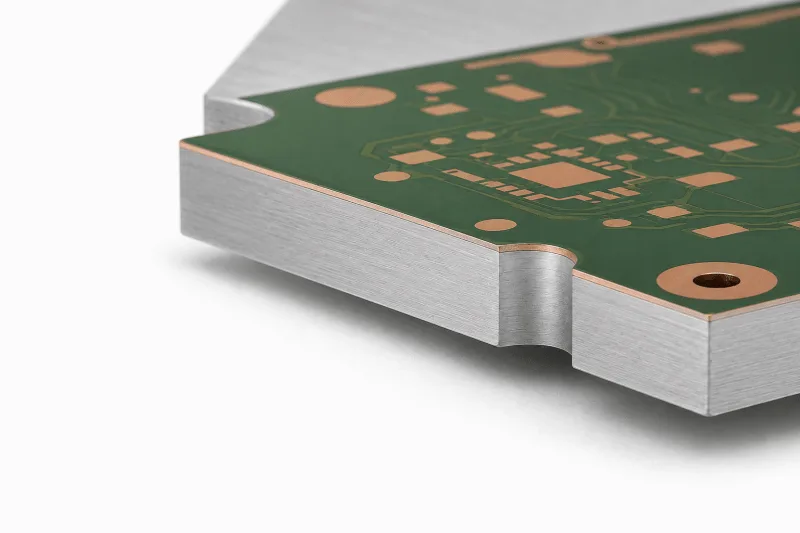
Metal core and metal-backed PCBs use aluminum, copper, or other metals to transfer heat away from critical components. In a metal core PCB, the metal layer forms part of the board structure. In a metal-backed PCB, a metal plate supports the circuit through a thermally conductive dielectric layer.These boards are commonly used in LED lighting, power electronics, automotive systems, industrial equipment, and RF or microwave applications.
Topline Circuit provides PCB layout, fabrication, and assembly based on each project’s thermal, electrical, mechanical, and cost requirements.
Overview of Metal Core PCBs
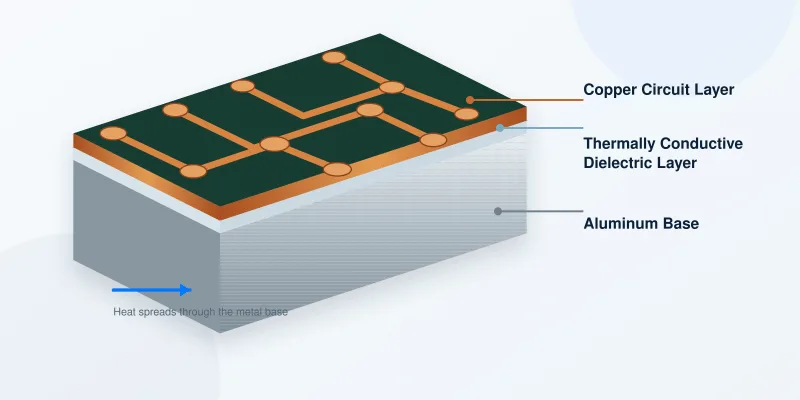
Metal core PCBs use a metal base to spread heat away from high-temperature components and transfer it to a heat sink, enclosure, or mounting surface. A typical structure combines a copper circuit layer, a thermally conductive dielectric, and an aluminum or copper base.This construction can improve heat dissipation, mechanical strength, and operating stability in high-power applications. Important design considerations include thermal conductivity, dielectric thickness, electrical isolation, metal thickness, board weight, mechanical processing, and cost.
Overview of Metal-Backed PCBs
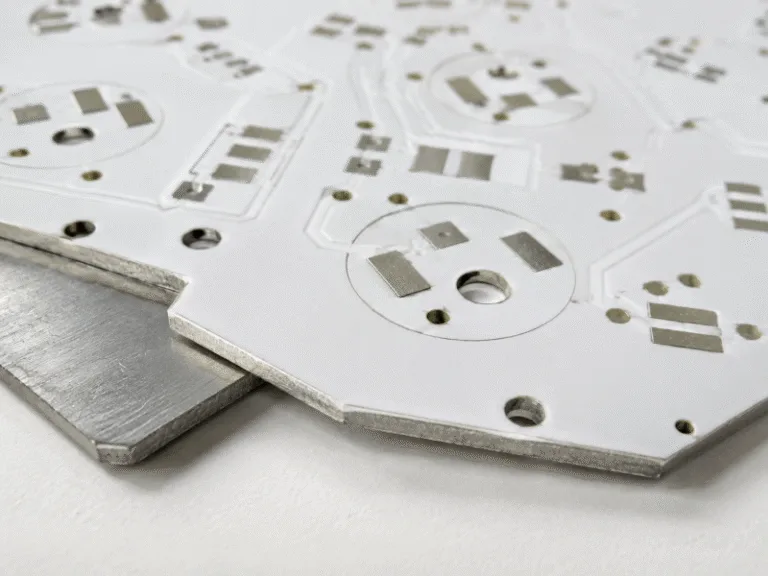
Metal-backed PCBs combine a conventional circuit board with an aluminum, copper, or other metal backing layer. Unlike a metal core PCB, the metal is attached to the back of the PCB rather than incorporated as the primary circuit substrate. A thermally conductive adhesive or dielectric layer bonds the two structures together.
The metal backing helps spread heat and provides additional mechanical support. Design considerations include electrical isolation, thermal conductivity, adhesive performance, differences in thermal expansion, board flatness, machining requirements, weight, and cost.
Buried CapSimilarities and Differences Between Metal Core and Metal-Backed PCBs
Applications for Metal Core and Metal-Backed PCBs
Topline Circuit Is Your Metal Core and Metal-Backed PCB Manufacturer
With more than 15 years of PCB manufacturing experience, Topline Circuit provides PCB layout, fabrication, and assembly for metal core and metal-backed PCBs. Our team supports customers across a wide range of industries with material selection, thermal design, manufacturability review, and production based on each project’s requirements.
Our engineering and manufacturing experience helps customers address the thermal, mechanical, and electrical requirements of these PCB structures while maintaining consistent production quality.