PCB Assembly Requirements for RF and Telecom Communication Boards
RF and telecom communicat



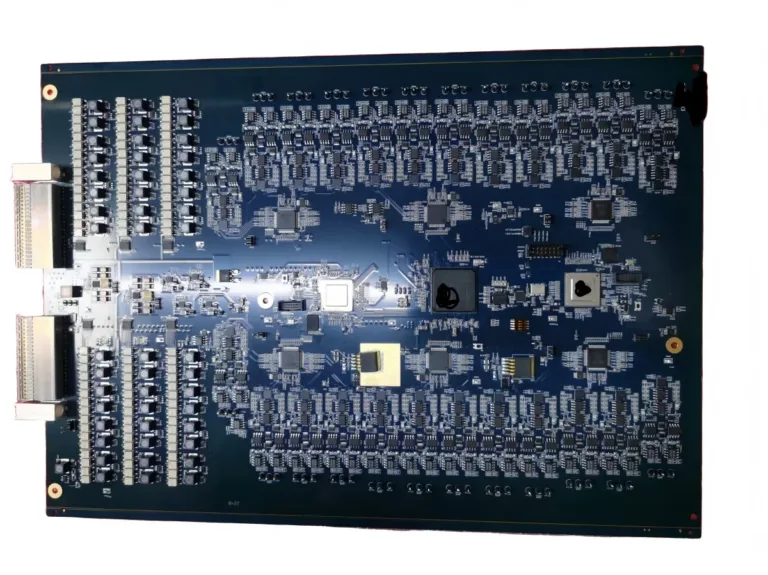
With the large-scale deployment of 5G and the trial commercialization of 6G, base stations have increasingly high requirements for signal transmission and equipment miniaturization. As the core of signal interaction in base stations, the communication backplane PCB board undertakes the core responsibilities of data transmission, power supply and signal distribution among various functional modules (CU/DU/AU), and its performance directly determines the operational efficiency, anti-interference ability and service life of the base station. Based on the harsh requirements of the base station communication scenario and combined with the latest industry technical standards, this solution provides a high-reliability, high-compatibility and low-cost overall solution for base station communication backplane PCB boards, which is suitable for various types of base station equipment such as macro base stations and micro base stations, helping the efficient upgrading of communication networks.

Analysis of Core Requirements for Base Station Communication Backplane PCB Boards
Base stations are mostly deployed in outdoor open-air scenarios or closed computer rooms, facing multiple challenges such as high and low temperatures, humidity changes, electromagnetic interference, vibration and impact. At the same time, they need to meet the requirements of high-speed signal transmission and high-density integration. The core requirements are focused on the following points, which are specific as follows in combination with the particularity of the base station operation scenario:
The above requirements jointly determine the design direction and process standards of the base station communication backplane PCB board, which is the core premise for the implementation of the solution.
Core Design of Base Station Communication Backplane PCB Board Solution
Combined with the needs of different base station units, differentiated domestic high-frequency and high-speed substrates are selected, and the specific selection is shown in the following table:
| Adapted Base Station Unit | Substrate Type | Core Parameters | Selection Advantages |
| CU (Central Unit) | High-speed Copper Clad Laminate | Dielectric Constant Dk 3.6–4.0, Dielectric Loss Df≤0.003, Heat Resistance Tg≥240℃ | Suitable for high-speed digital processing, with prominent cost performance of domestic materials |
| DU (Distributed Unit) | Medium and High-frequency Copper Clad Laminate | Dielectric Constant Dk 3.9–4.5, Dielectric Loss Df≤0.0025, Heat Resistance Tg≥250℃ | Balances high-frequency and high-speed digital signal transmission without mutual interference, mature and stable |
| AU (Antenna Unit) | High-frequency Copper Clad Laminate | Dielectric Constant Dk 3.8–4.2, Dielectric Loss Df≤0.002, Heat Resistance Tg≥260℃ | Suitable for low-loss transmission of U6G high-frequency signals, mature domestic substitution |
The substrates are all selected from domestic leading enterprises such as Shengyi Technology and Huazheng New Materials, realizing the localization of core materials, reducing supply chain risks, and their performance reaching the level of international similar products, with the cost about 30% lower than that of imported substrates.
Details of Layer and Wiring Design
A multi-layer wiring structure is adopted, and differentiated design is adapted to different base stations, focusing on signal stability. The specific details are as follows:
The scientific layer and wiring design effectively avoids problems such as signal crosstalk and reflection, and ensures the stable transmission of high-speed and high-frequency signals.
Key Points of Heat Dissipation and Protection Design
In view of the environmental characteristics of outdoor base station deployment and the heat generation during operation, the key points of heat dissipation and protection design are as follows:
The complete heat dissipation and protection measures greatly improve the environmental adaptability of the PCB board and extend the service life of the base station equipment.
Requirements for Core Production Processes
Strict control is exercised over each process in the production link, and the specific requirements for the core production processes are as follows:
The standardized core production processes provide a solid guarantee for the performance consistency and reliability of the PCB board.
Finished Product Testing Standards
Before leaving the factory, the finished products undergo multi-dimensional testing, and the specific standards are shown in the following table:
| Testing Item | Testing Standard | Testing Method |
| Signal Integrity Test | Signal Delay ≤ 10ns, Crosstalk ≤ -30dB, Impedance Tolerance ±7% | Tested by TDR Time Domain Reflectometer and Network Analyzer |
| Environmental Adaptability Test | Wide Temperature -40℃~85℃, No Failure After 500 Temperature Cycles; No Corrosion After 48-hour Salt Spray Test | Tested by High and Low Temperature Test Chamber and Salt Spray Test Chamber |
| Electrical Performance Test | Insulation Resistance ≥ 10^12Ω, Withstand Voltage ≥ 2000V, No Short Circuit or Open Circuit | Tested by Insulation Resistance Tester and Withstand Voltage Tester |
| Mechanical Performance Test | Anti-vibration, Anti-impact, No Delamination or Disconnection | Tested by Vibration Test Bench and Impact Test Bench |
Core Advantages of the Solution
Compared with traditional solutions, this solution has significant advantages in localization, performance, reliability and other aspects, which are specific as follows:
The superposition of multiple core advantages enables this solution to efficiently adapt to various base station scenarios and meet the needs of communication network upgrading.
Application Scenarios of the Solution
This solution is suitable for 5G macro base stations, 5G micro base stations, 6G trial commercial base stations and distributed base stations. It can be used as the core backplane of the base station to carry the functions of CU unit computing power transmission, DU unit intermediate frequency processing, and AU unit radio frequency signal transmission. It is widely used in various base station deployment scenarios such as cities, rural areas, industrial parks and remote areas. At the same time, it can adapt to the expansion needs of emerging communication scenarios such as integrated communication and sensing, and space-air-ground integration, providing reliable hardware support for the upgrading of communication networks.
RF and telecom communicat
Choosing a PCBA manufactu