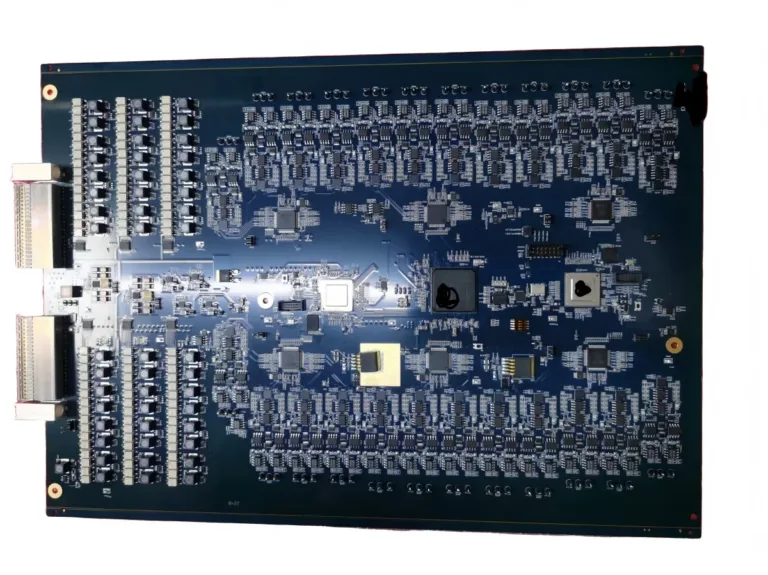
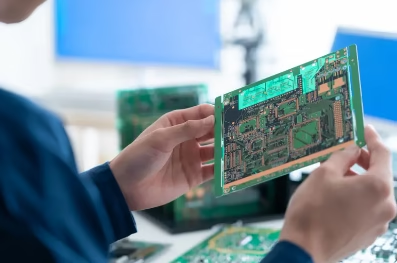
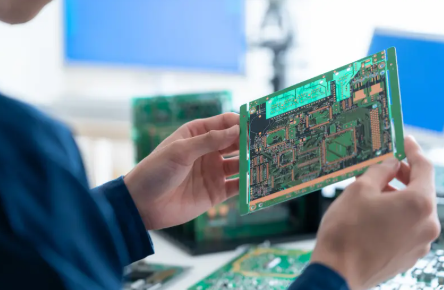
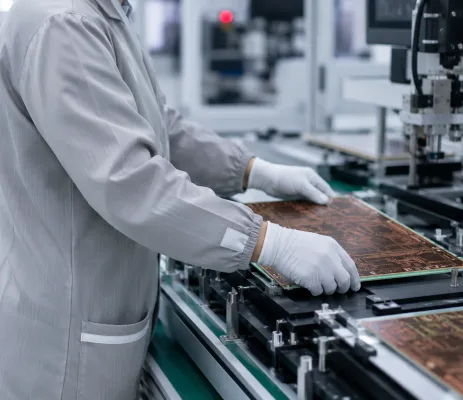
With the continuous growth of the Industrial Internet of Things (IIoT), smart factories, automation equipment, industrial robots, and remote monitoring systems are placing higher demands on electronic hardware. Compared with consumer electronics, industrial IoT devices are required to operate stably for long periods under harsh environments such as high temperatures, humidity, strong electromagnetic interference, and continuous heavy workloads. As a result, PCB material selection has become a critical factor in industrial electronic design. A well-designed material solution not only affects signal transmission efficiency but also directly impacts equipment lifespan, system reliability, and long-term maintenance costs.
Core Performance Requirements for Industrial IoT PCB Materials
Industrial IoT environments are highly demanding, so PCB materials must simultaneously provide reliability, high-speed performance, and environmental resistance.
High Reliability and Environmental Resistance
Industrial devices often operate continuously for extended periods, making material stability extremely important.
PCB materials should feature a high glass transition temperature (TG value) to maintain structural stability under high-temperature conditions and prevent warping or delamination
In humid, dusty, or chemically corrosive environments, the board must maintain strong insulation properties to reduce the risk of short circuits and leakage
Industrial sites commonly involve vibration and mechanical shock, requiring PCB materials with strong mechanical durability for long-term reliability
Outdoor industrial equipment also requires weather resistance to withstand temperature changes and harsh environmental conditions
High-Speed Signal Transmission Capability
As industrial automation and 5G industrial communication continue to expand, real-time data transmission has become increasingly important.
Low dielectric constant (Low Dk) materials improve signal propagation speed and reduce transmission delay
Low loss (Low Df) materials minimize signal attenuation and maintain communication stability in high-frequency environments
Proper impedance control reduces signal reflection and crosstalk in high-speed interfaces and industrial gateways
High-frequency materials improve the efficiency of industrial cameras, edge computing devices, and wireless communication modules
Electromagnetic Compatibility and Anti-Interference Performance
Industrial environments contain motors, inverters, and high-power systems that generate significant electromagnetic interference.
High-quality PCB substrates help reduce electromagnetic radiation and improve device stability
Optimized material structures minimize crosstalk between high-speed signals
Improved grounding and shielding designs enhance overall EMC performance
Strong EMC capability helps prevent equipment malfunction and abnormal data transmission in complex industrial environments
Common PCB Material Solutions for Industrial IoT
Different industrial applications require different material characteristics, making proper material selection essential.
PCB Material Comparison Table
Material Type
Main Features
Typical Applications
High TG FR-4 Material
Strong stability, cost-effective
Industrial control systems
High-Frequency Low-Loss Material
Excellent high-speed performance
Industrial communication equipment
Metal Core PCB
Superior thermal conductivity
High-power industrial modules
Flexible PCB (FPC)
Bendable and lightweight
Smart sensing devices
High TG FR-4 Material Solution
High TG FR-4 is one of the most widely used PCB materials in industrial applications.
Compared with standard FR-4, high TG materials provide better thermal stability under continuous high-temperature operation
Suitable for industrial controllers, power modules, and monitoring systems that require long-term reliability
Cost-effective for large-scale industrial deployment
Provides sufficient performance for most medium- and low-speed industrial devices
High-Frequency Low-Loss Material Solution
As industrial communication speeds increase, high-frequency materials are becoming increasingly important.
Significantly reduce signal attenuation during high-speed transmission
Improve data stability in industrial wireless modules, 5G communication systems, and edge computing devices
Maintain stable impedance consistency in high-frequency applications, improving signal integrity
Particularly suitable for industrial gateways, machine vision systems, and high-speed data acquisition equipment
Additional heat sinks or metal structures can be added in high-temperature areas
Thermal simulation helps identify potential overheating risks early in the design stage
Future Trends in Industrial IoT PCB Development
As smart manufacturing continues to evolve, Industrial IoT PCB technology is also advancing rapidly.
High-Frequency and High-Speed Development
Future industrial communication systems will increasingly rely on high-speed data transmission.
Demand for high-frequency low-loss materials will continue to grow
Industrial 5G and edge computing will drive expansion of the high-speed PCB market
Higher layer counts and more precise structures will become mainstream
Miniaturization and High Integration
Industrial devices are moving toward compact and modular designs.
HDI structures are being adopted more widely
More functions are being integrated onto a single PCB
Compact designs help reduce space usage and power consumption
High Reliability and Green Manufacturing
Industrial markets are placing greater emphasis on long-term reliability and environmentally friendly production.
Halogen-free environmentally friendly materials are becoming more common
Low-energy manufacturing processes are receiving more attention
Longer lifespan designs help reduce maintenance costs for industrial systems
In the rapidly growing Industrial IoT industry, PCBs have become far more than simple connection platforms — they are now a critical factor affecting system reliability, communication efficiency, and long-term operational stability. From high TG materials and high-frequency low-loss solutions to multilayer structures and thermal optimization, every detail influences industrial system performance. By selecting the right PCB materials and structural designs based on specific industrial environments, manufacturers can meet the evolving demands of smart manufacturing and industrial automation while achieving stable, efficient, and reliable operation in complex industrial conditions.
Project Support
PCB & PCBA Support
Our team can help you evaluate the board structure, materials, component assembly, and testing requirements based on your product’s operating environment and performance needs.